
Long out of print & accessible only to collectors, we are restoring Bob Mizer's Physique Pictorial page-by-page to make it freely accessible & easy to explore online.
This restoration funds the creation of a gay resort cooperative in Portugal inspired by the colorful story of Bob's childhood home turned studio, where he lived with his mother & his many models.
From 1951 to 1990, Bob published his homoerotic male physique photographs & works by queer illustrators in his Physique Pictorial. Curiously, he did not to include the statements required under the Copyright Act of 1909 to secure copyright. This is especially notable because other gay-oriented physique publishers—such as The Male Figure, Young Physique, & Physique Illustrated—prominently used proper notices.
Bob, whose Physique Pictorial held the highest circulation in the genre, was hardly working in isolation. It is plausible that he omitted notices intentionally as his studio, the Athletic Model Guild, was his primary business & the magazine functioned largely as a promotional vehicle for selling his photographs. Allowing issues to be copied may have supported that goal. Another possibility—given his long history of obscenity-related legal battles—is that he believed his material was not eligible for copyright. Whatever the reason, the absence of notices meant that most of his issues entered public domain immediately upon publication.
Under the Copyright Act of 1976, works published on or after January 1, 1978 received automatic copyright protection, even though notice was still required. If a notice was omitted, the law allowed for corrections through registration within five years of publication. Bob, however, never registered any issues of Physique Pictorial. As a result, the copyright status of Physique Pictorial issues Volume 31 to 41 is unresolved.
Bob's public domain materials includes only his published works that lacked notice during the relevant timeframe. This does not apply to his later works, unpublished material, his negatives, or any creative derivatives made from public domain content, all of which may be protected.
Our work begins with obtaining physical copies of each available issue. We're gradually building our library through donated magazines & careful hunting. To avoid any potential copyright complications, we work from the original physical publications.
Scanning a bound digest introduces page curvature, gutter loss, & warped text where the paper bends into the fold. To eliminate those distortions, we remove the staples & work from loose sheets, a method that consistently yields a far higher‑quality scan.
Once the digest is unbound & each sheet is unfolded, the two printed pages on every side of the sheet appear side-by-side—for example, the front cover & the back cover. This unusual pairing is determined by the imposition: the layout used to ensure pages fall in the correct order after binding & folding.
We often have multiple issues in queue & use Patreon supporter rankings to decide what to process next.
We scan both sides of every sheet at 1200 dpi, the maximum true optical resolution of our scanner & a level that preserves the halftone: the printer equivalent of a pixel. We use PNG files to avoid compression artifacts & perform lossless file optimization to reduce file size by roughly 25%.
We're funded by the community, powered by volunteers, built on open-source tools, & utilize the public domain in our effort to create a cooperative, so we absolutely know the importance of equity & open access. We make all scans available on GitHub to allow anyone to easily use & repurpose this material without restriction, or having to bear the cost of acquisition, or the labor of digitization, & to help preserve the dwindling number of surviving copies.
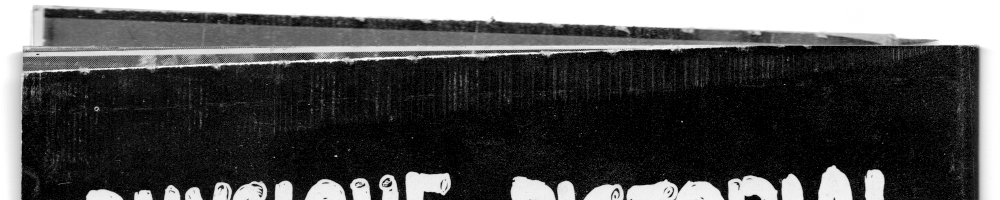
We align every scan, crop it into its individual pages, & position sets of pages onto its spread: the pairing of two facing pages that are viewed together. From the spread we can separate the pages as needed for imposition-based printing or preserve the spread for reading.
The original page included a bleed: an area beyond where pages would be trimmed that photographs extended into to eliminate white edges. Although this bleed was trimmed & discarded decades ago, our reconstructed spread restores the original dimensions of the page to include the bleed.
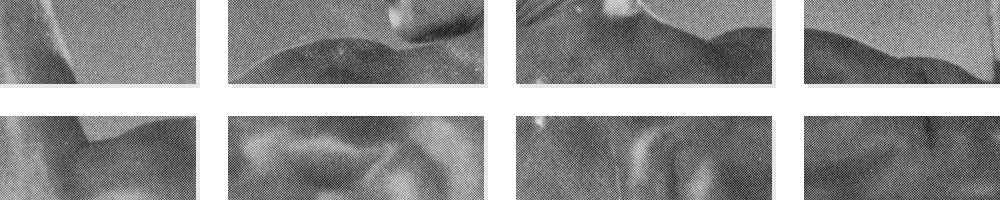
Each spread file is roughly 100 MB, which would make casual page-flipping sluggish—especially for smartphones using cellular data. To keep the experience fast, we divide each trimmed spread into tiles: small, lightweight images only a few kilobytes each, generated across multiple zoom levels. This lets visitors load only the pixels they need, enabling smooth, responsive viewing of the entire collection. This also marks the first time readers can flip through partially processed issues.
The trade-off is that tiled images are difficult to download. Anyone wanting to download images should use our GitHub repository or, once processed, our Patreon collections which provide ready-to-use images.
With the digest online, visitors can use our wiki-like website tools to transcribe the text from each page. Once saved & reviewed, the transcriptions are displayed beneath their corresponding pages to improve accessibility.
We aim for faithful reproduction of the original text, making only minor corrections to fix typos & other clear errors.
We crop each spread to isolate every image as its own file. Once all images are saved, we assemble & publish the corresponding Patreon collection for the issue.
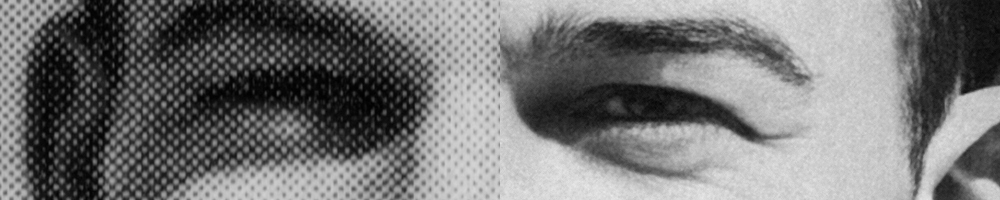
Using the isolated images & tools like Photoshop, we remove the halftone, fill staple holes, repair paper tears, correct contrast, clean stains, reverse ink spread, add texture, & reconstruct the bleed.
With many images in queue, we use Patreon supporter rankings to determine the restoration order. As each image is completed, supporters receive high-resolution digital copies for personal use.
The creative restoration process turns the scans into new, copyrightable derivative works. These restored images are registered with the United States Copyright Office & require a license for commercial use.
We rebuild each spread using the transcribed text & newly restored images. This reconstruction happens gradually once all the needed text is available & the corresponding images are complete. Once rebuilt, we retile the spreads to improve online viewing.
We create & sell merchandise featuring the restored photographs. Each purchase fuels a positive feedback loop that helps fund further restoration.
Once every page of an issue is restored, we can reconstruct the imposition to produce high-quality prints. We then share these prints, with modifications as needed, with age-appropriate queer‑focused organizations, helping to circulate Bob Mizer's work & raise awareness of our mission.